Not a Willow
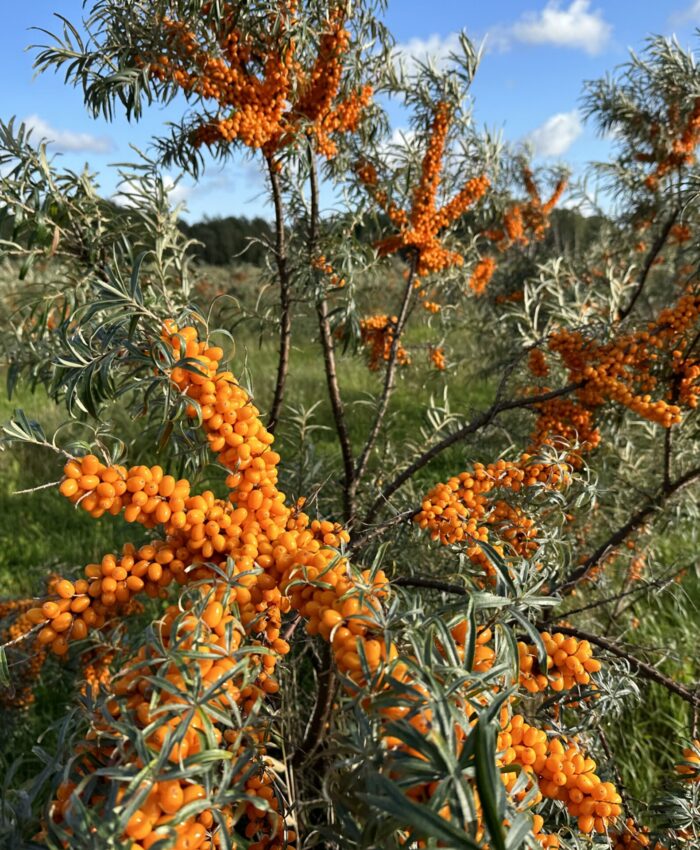
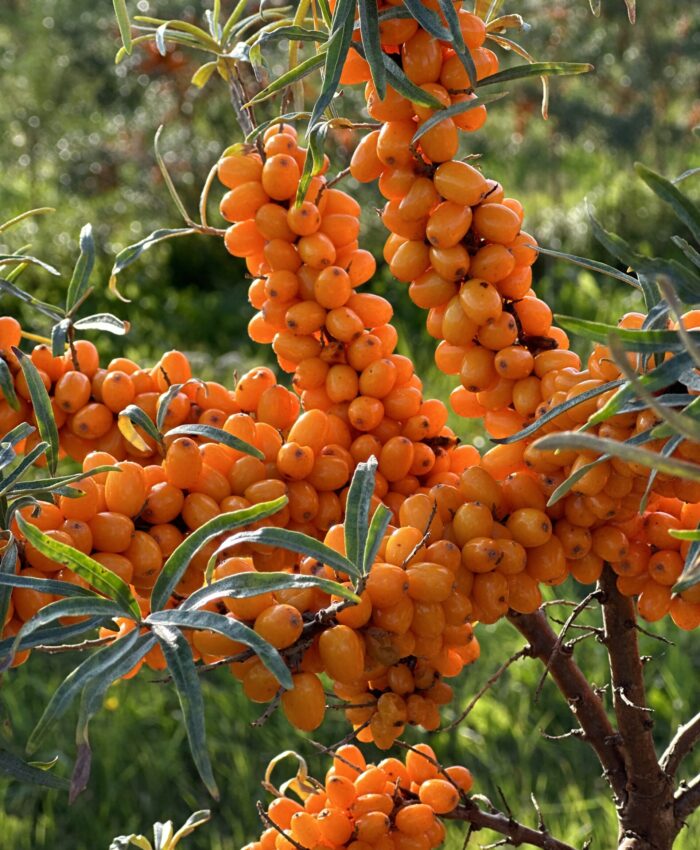
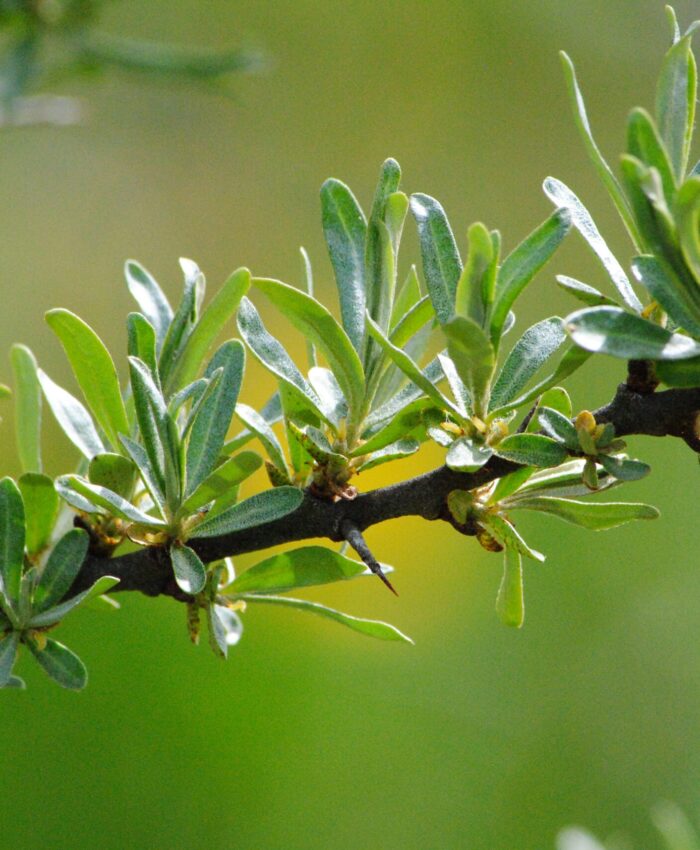
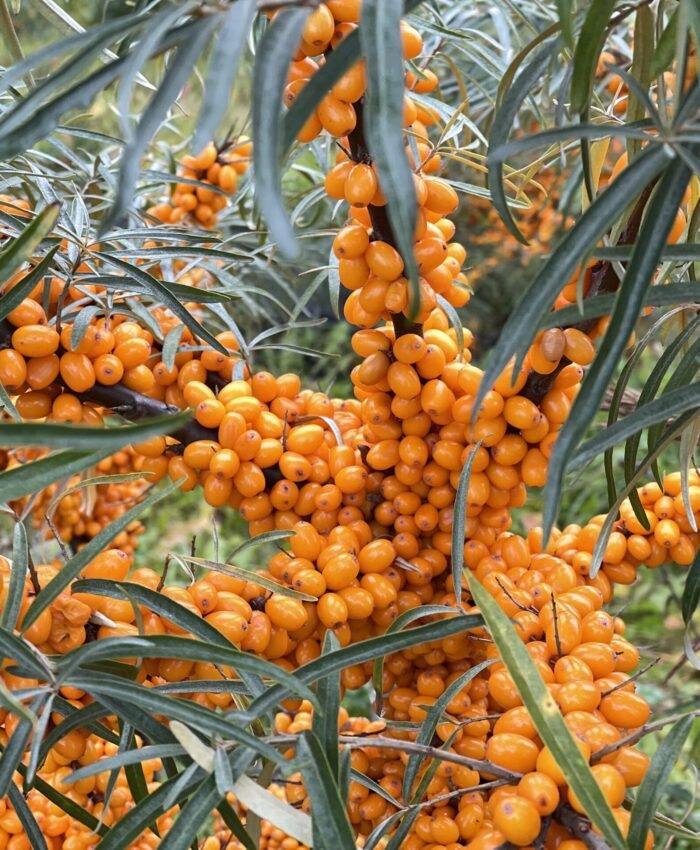
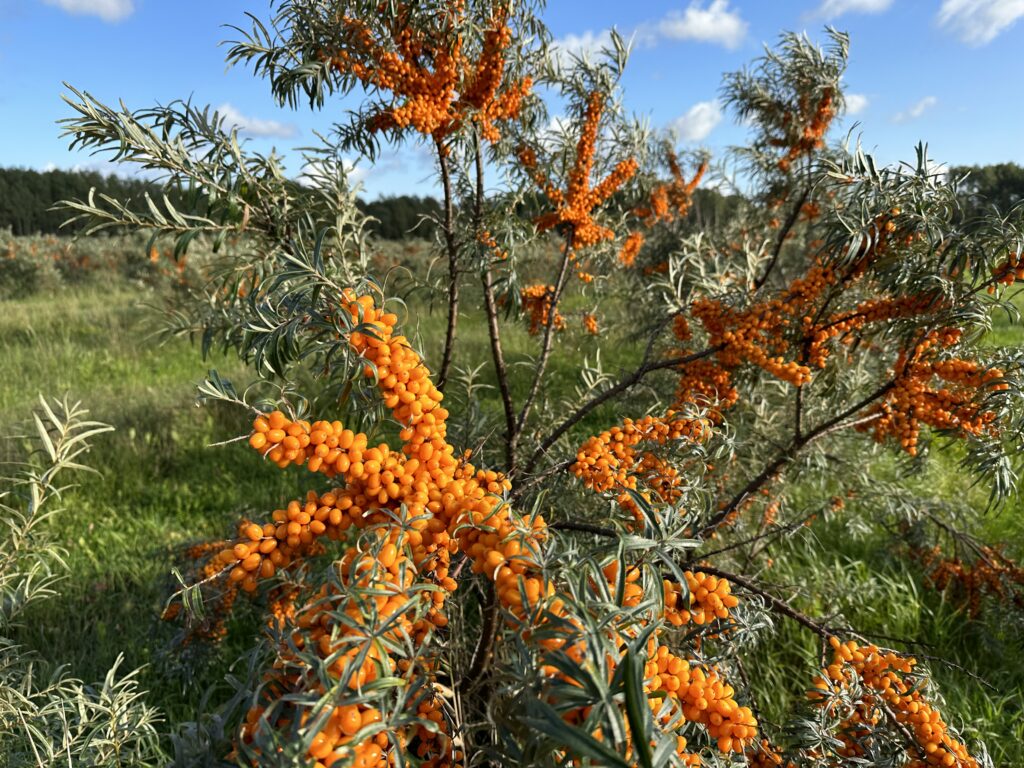
In Estonian, sea buckthorn is called astelpaju, a compound word where astel means “thorn” and paju means “willow.” This helps explain where the confusion begins. Young sea buckthorn shrubs, with their narrow grey-green leaves, can indeed resemble willows. But despite the visual similarity, and even the name, there is no close botanical connection.
The scientific name of sea buckthorn is Hippophae rhamnoides, and it belongs to the Elaeagnaceae family, commonly known as the oleaster family. Willows, on the other hand, belong to the genus Salix and the Salicaceae family. From a botanical perspective, these are quite distant groups.
The resemblance comes mainly from leaf shape. Sea buckthorn’s narrow, silvery leaves can look similar to willow leaves, especially in young plants. But this is where the similarity ends.
Plant names and associations are often based on appearance rather than taxonomy. This is not unusual. A peanut is not a true nut, and a strawberry is not a botanical berry. In fact, the red fleshy part of a strawberry is not the fruit at all, it’s actually an enlarged flower base. The real fruits are the tiny dots on its surface, each containing a seed.
Not an Olive Either
A mature sea buckthorn shrub can sometimes resemble an olive tree. However, olives belong to a completely different family, Oleaceae.
The similarity is a result of adaptation. Olive trees are adapted to heat and drought, while sea buckthorn is adapted to cold, wind, and poor soils. Both grow relatively slowly, both have narrow leaves, and both can develop twisted, sculptural forms with age.
This is a good example of how environmental pressures can lead to similar forms—even in unrelated plants.
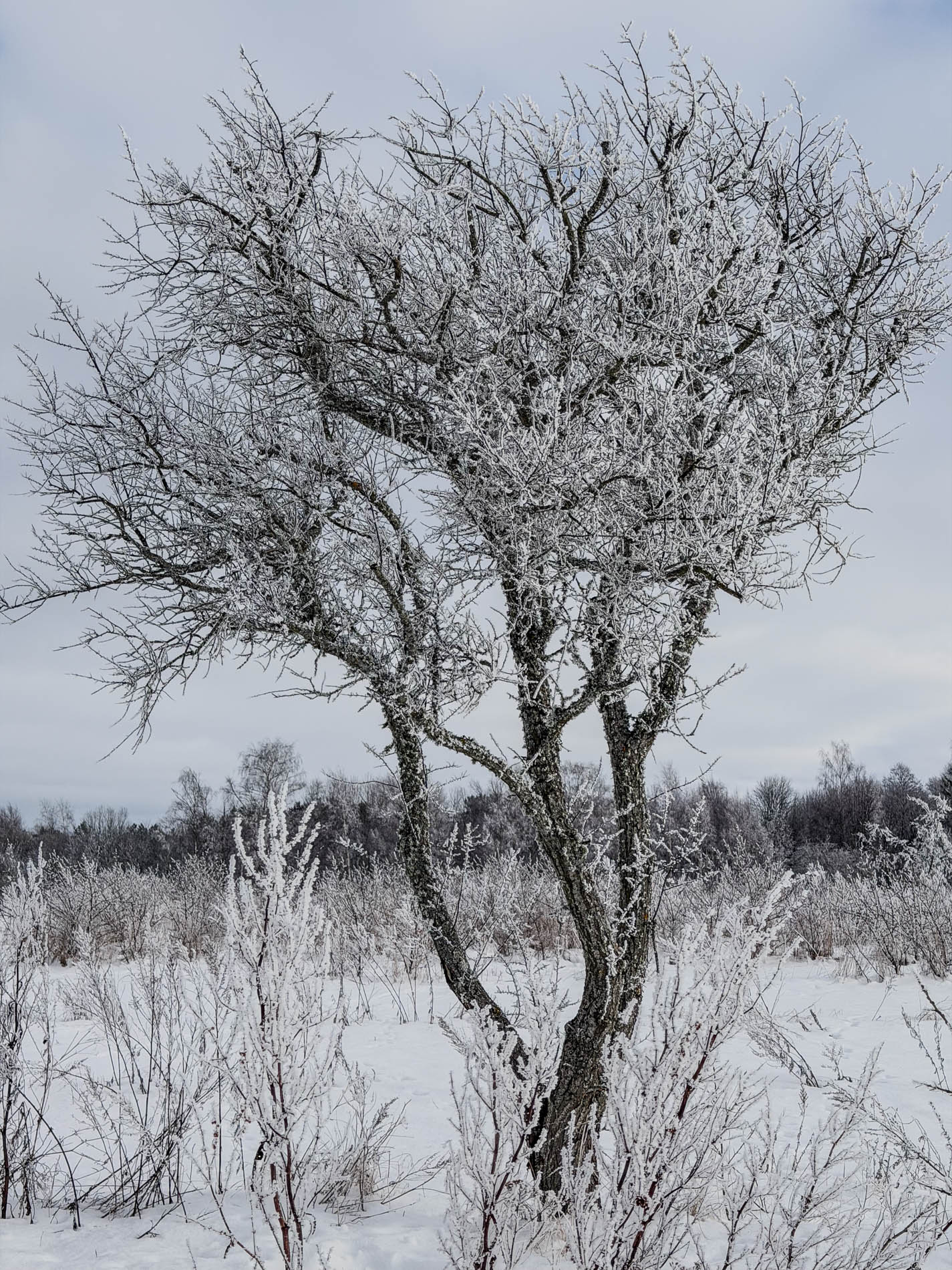
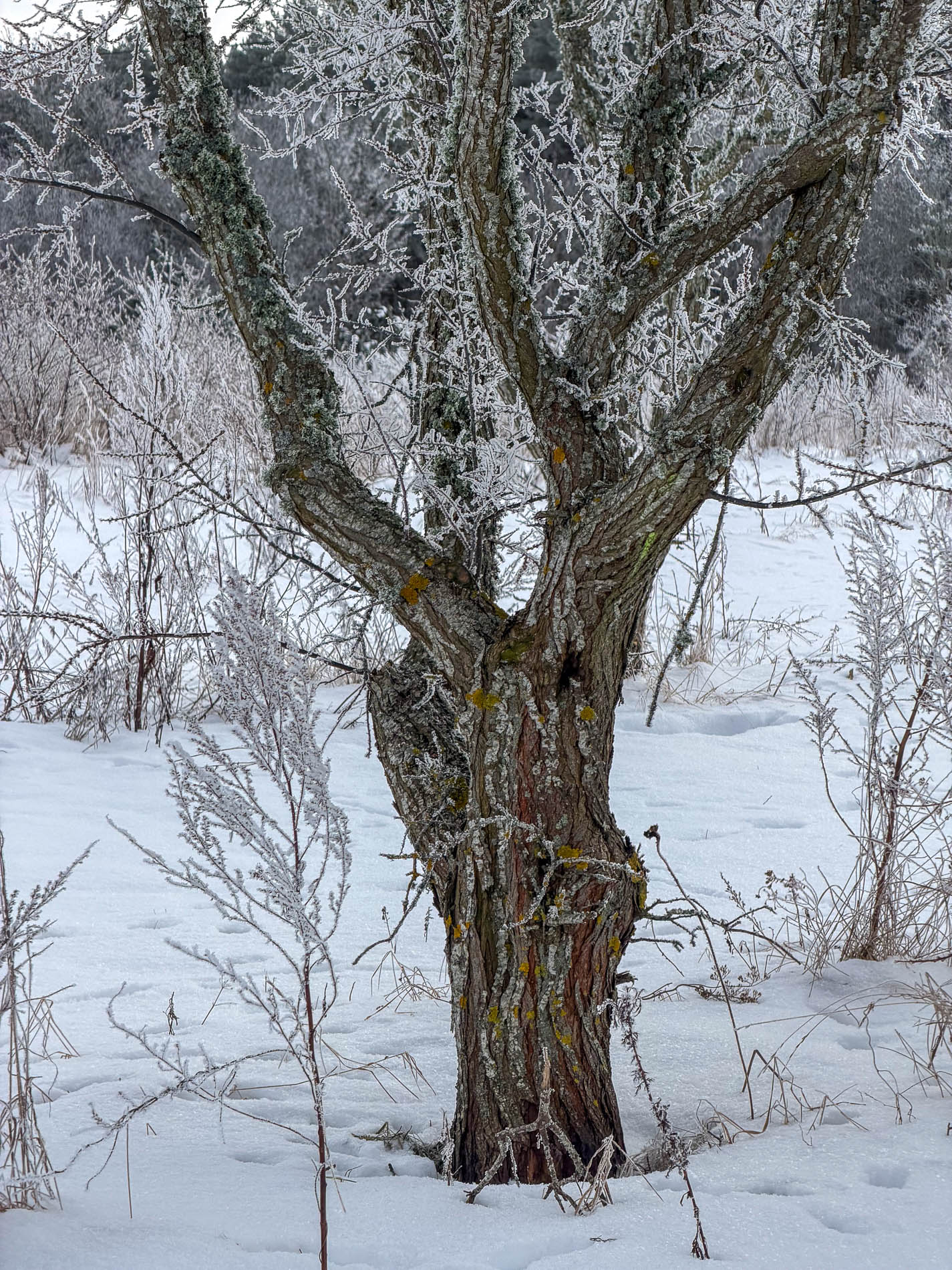
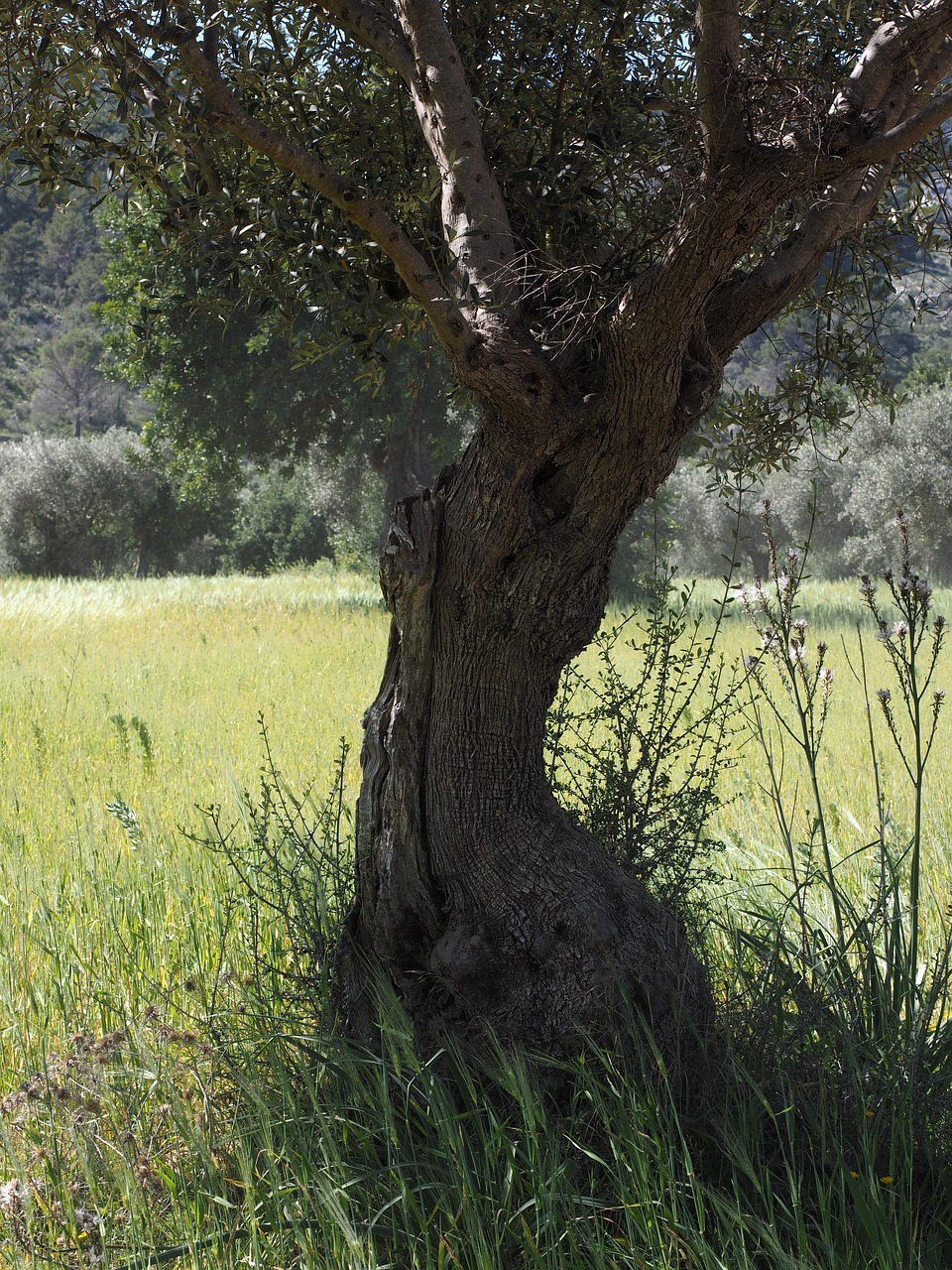
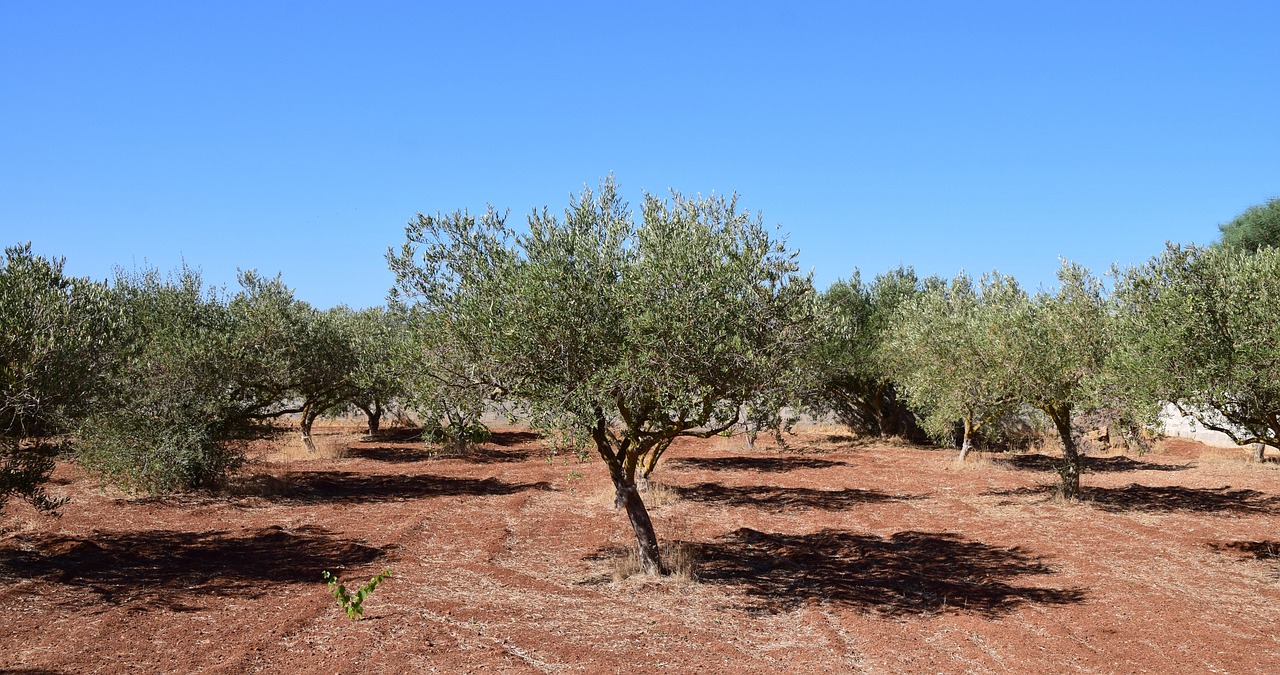
Sea buckthorn (in the winter images) and Mediterranean olive trees can look surprisingly similar in form.
What Is Sea Buckthorn Related To?
Sea buckthorn’s closest relatives are found within the Elaeagnaceae family. The most important genera are Elaeagnus (oleaster) and Shepherdia.
These plants share several traits: silvery foliage, strong resilience, and the ability to grow in conditions where many other species struggle.
One well-known relative is Elaeagnus angustifolia, commonly known as Russian olive. Despite its name, it is not an olive tree, but a member of the same family as sea buckthorn.
Other species in the Elaeagnus genus include Elaeagnus commutata and Elaeagnus multiflora, both used as ornamental or fruiting plants. In North America, species of Shepherdia, such as Shepherdia argentea (buffaloberry), are also closely related.
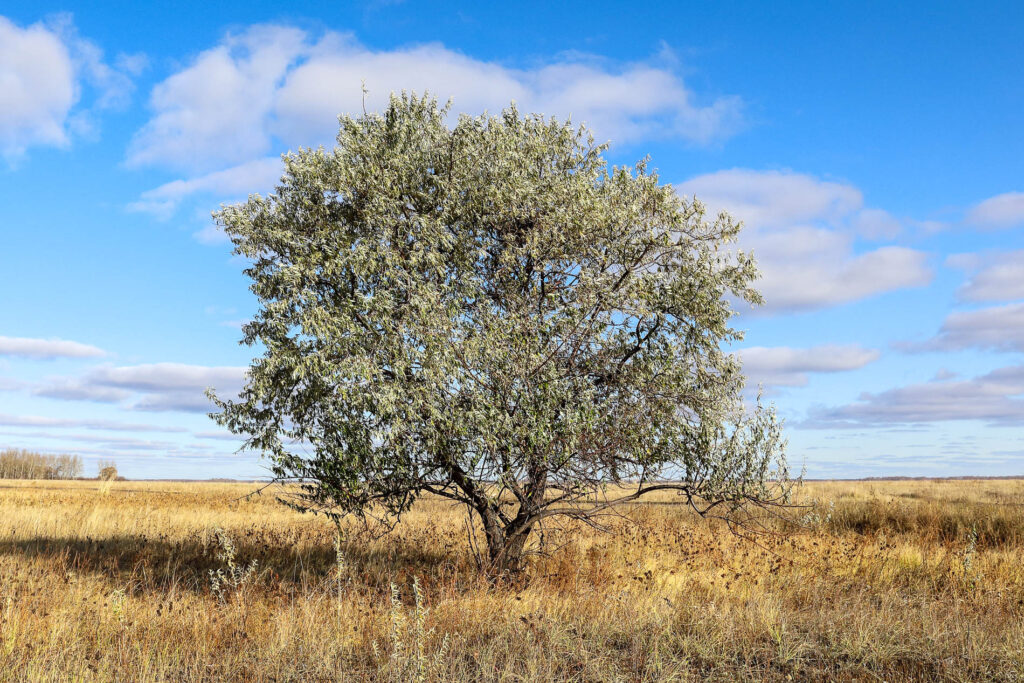
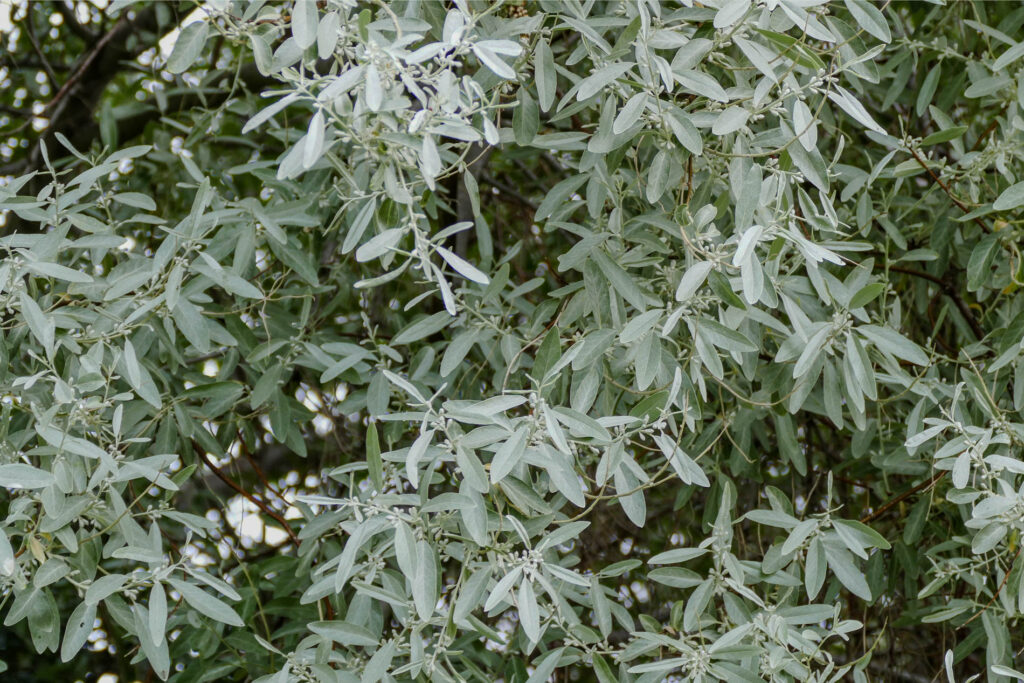
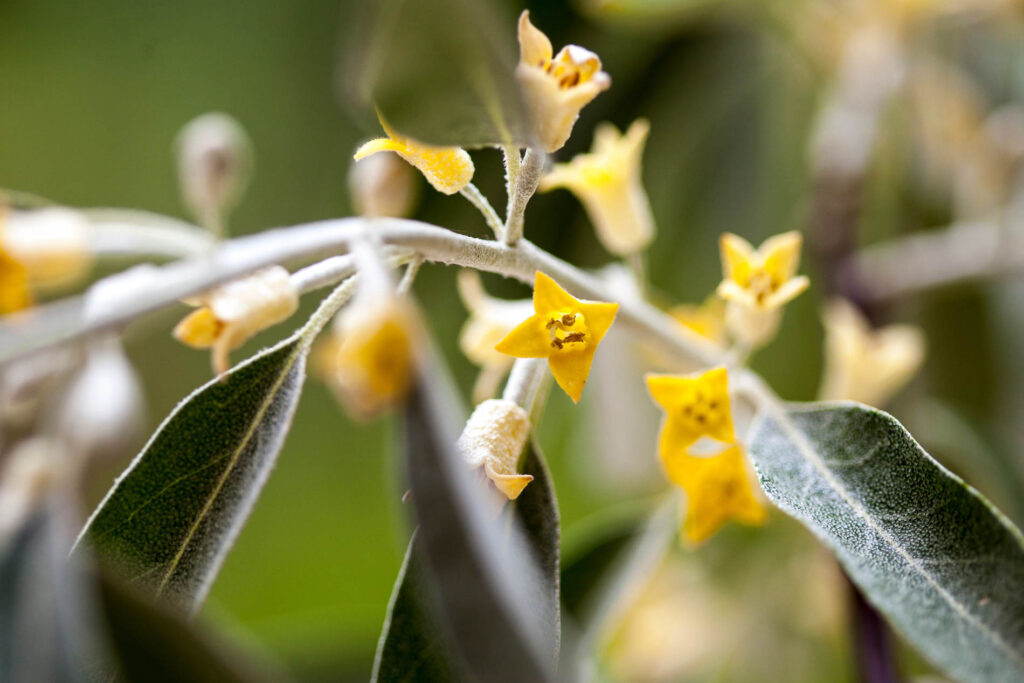
Elaeagnus angustifolia shares many visual traits with both olive and sea buckthorn with narrow silvery leaves and a greyish canopy, but differs in its flowers. Unlike sea buckthorn, it produces small yellowish flowers that are often strongly and pleasantly scented.
Why These Plants Thrive in Poor Soils
Beyond their appearance, these plants share an important ecological trait. Most members of the Elaeagnaceae family form symbiotic relationships with Frankia bacteria, which live in nodules on their roots. These bacteria fix atmospheric nitrogen and make it available to the plant.
This allows sea buckthorn and its relatives to grow in sandy, rocky, and nutrient-poor soils where many other plants would struggle. For this reason, they are often considered pioneer species or in other words plants that are among the first to colonise harsh environments and gradually improve soil conditions.
As this example shows, plant names and visual similarities can be misleading. Sea buckthorn may resemble willow or olive at first glance, but its true relatives are found elsewhere. Understanding those relationships gives a clearer picture of how the plant grows, where it thrives, and why it is so well adapted to difficult environments.
- Li, T. S. C. & Beveridge, T. H. J. (2003). Sea Buckthorn (Hippophae rhamnoides L.): Production and Utilization. NRC Research Press.
- Rousi, A. (1971). The genus Hippophae L. A taxonomic study. Annales Botanici Fennici, 8(3), 177–227.
- Swenson, U. & Bartish, I. V. (2002). Taxonomic synopsis of Hippophae (Elaeagnaceae). Nordic Journal of Botany, 22(3), 369–374.
- Kato, K., Kawamura, F., Kikuchi, A., Yasuda, M. & Kondo, T. (2008). Nitrogen fixation in sea buckthorn (Hippophae rhamnoides L.) with Frankia. Plant and Soil, 311, 177–185.