A chemical outlier among plants
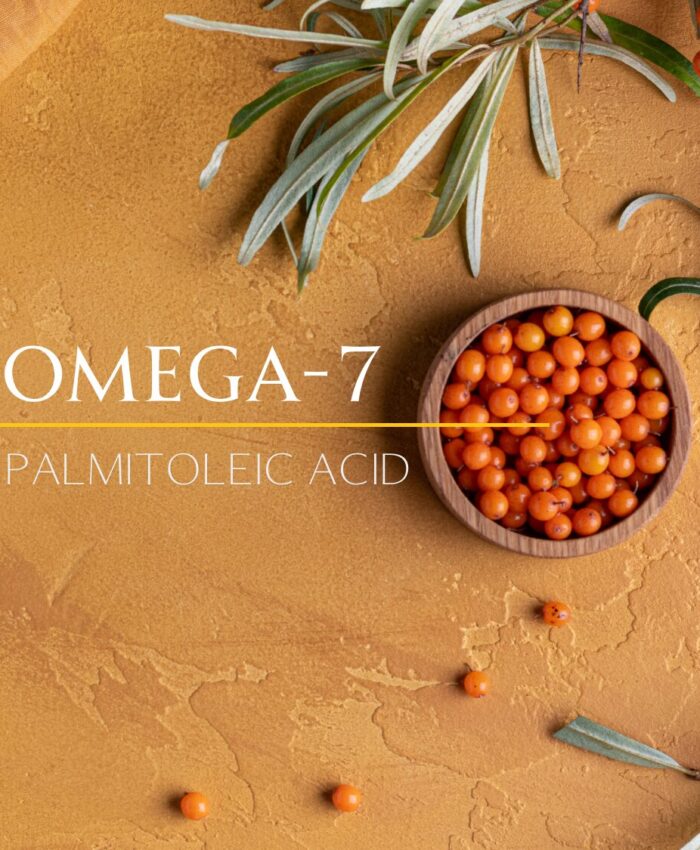
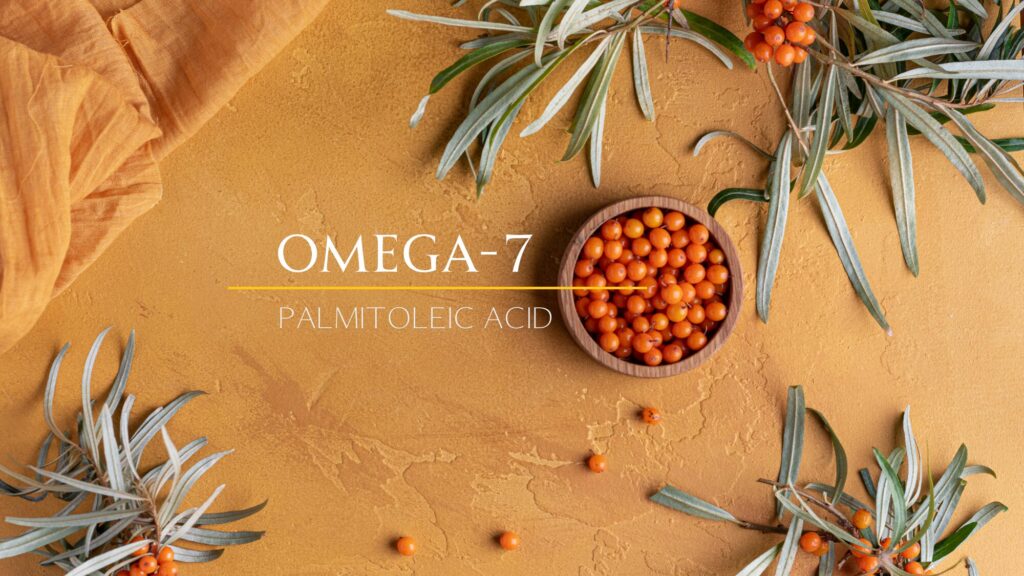
Omega-7 refers primarily to palmitoleic acid, a monounsaturated fatty acid with a structure that sets it apart from most plant-derived lipids. While omega-3 and omega-6 fatty acids are widespread in plant metabolism and essential for seed development and energy storage, palmitoleic acid is not. Biochemically, it reflects a fatty acid synthesis pattern that plants generally don’t bother with. From an evolutionary perspective, there was simply no pressure to maintain it. As a result, it is usually present only in trace amounts—or not at all—in plant oils.
What the name ‘palmitoleic acid’ refers to
The name palmitoleic acid can create confusion, as it seems to imply a connection to palm oil. In reality, the name describes chemical structure, not botanical origin.
The “palmit-” part refers to palmitic acid, a saturated 16-carbon fatty acid first isolated in the 19th century from palm oil (from palma, Latin for palm). The “-oleic” part comes from oleic acid, a well-known monounsaturated fatty acid, derived from oleum, Latin for oil. Palmitoleic acid is essentially the monounsaturated version of palmitic acid: the same 16-carbon backbone, with one double bond added. The name reflects this structural relationship, not the source of the molecule.
Sea buckthorn pulp oil as a natural omega-7 source
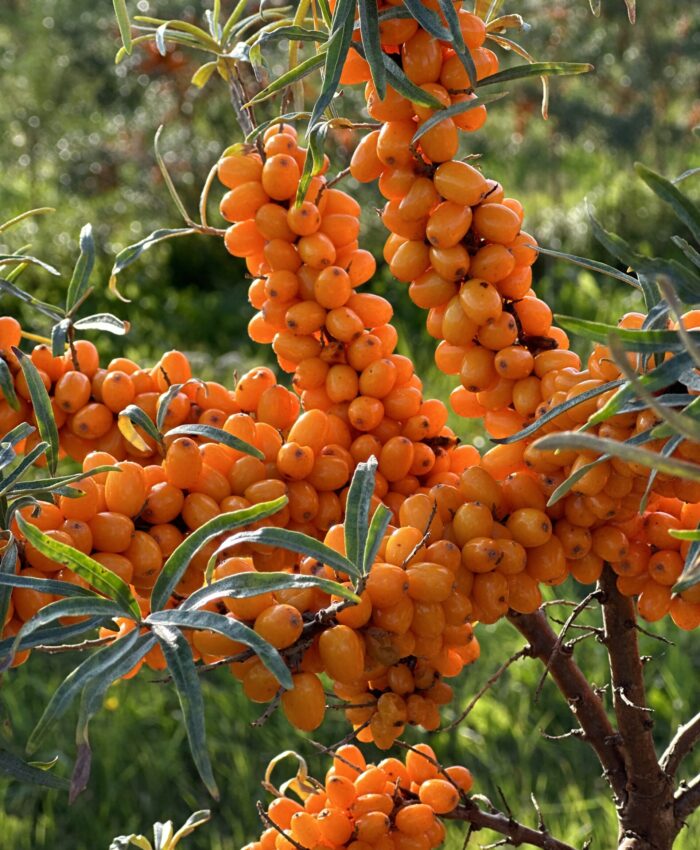
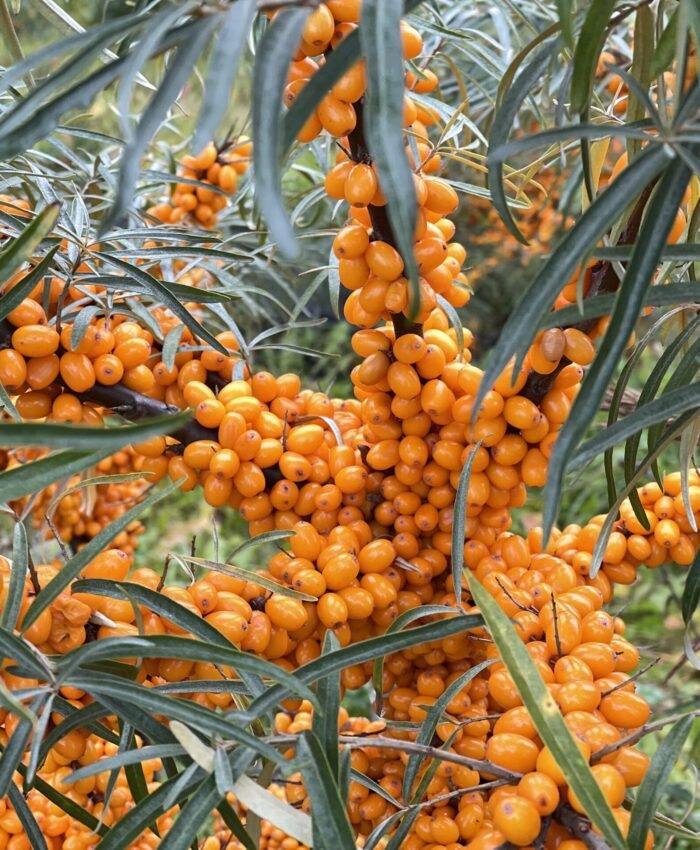
Sea buckthorn differs from most oil-bearing plants in that oil is present not only in the seeds but also in the berry pulp and peel. It is this pulp oil that contains high levels of palmitoleic acid. Studies consistently show that omega-7 can account for roughly 20–45% of the total fatty acids in sea buckthorn pulp oil—an exceptionally high proportion by plant standards.
Interestingly, the seed oil of the same berry has a completely different profile. There, omega-6 linoleic acid and omega-3 alpha-linolenic acid dominate, while omega-7 appears only in negligible amounts. In other words, a single berry produces two chemically distinct oils with very different fatty acid compositions.
Beyond sea buckthorn, palmitoleic acid is found in only a few plant oils, most notably macadamia nut oil, where levels are typically lower. Animal sources include certain fish oils, dairy fat, and human sebum, where palmitoleic acid is a natural component of the skin’s lipid barrier.
Why omega-7 attracts scientific and cosmetic interest
Palmitoleic acid is not foreign to the human body. It is naturally present in the lipids of the skin and mucous membranes, where it contributes to barrier function, moisture retention, and tissue flexibility. This biochemical familiarity helps explain why sea buckthorn pulp oil has attracted particular attention in cosmetic and skin science.
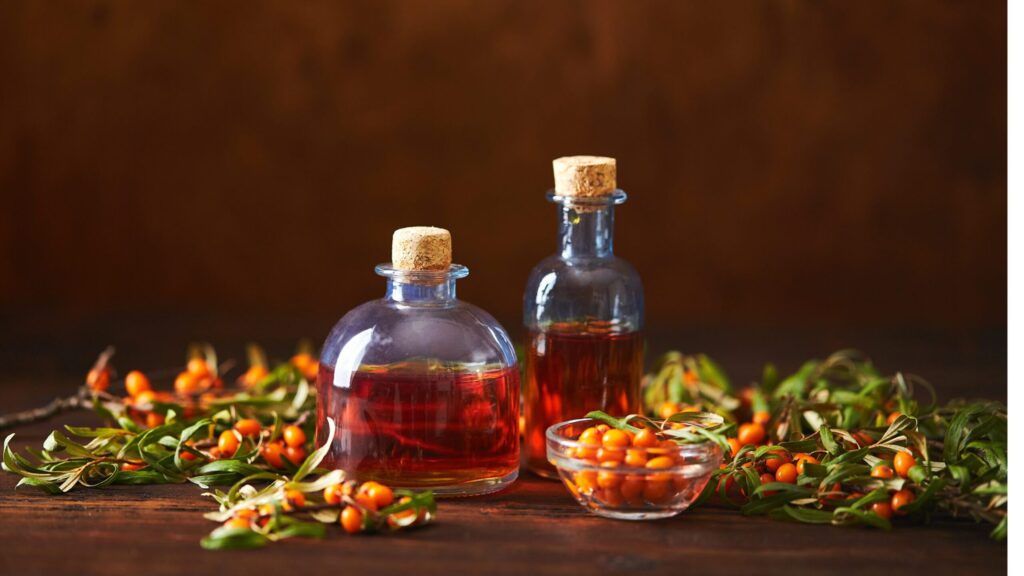
The lipid profile of sea buckthorn pulp oil resembles the composition of human skin lipids more closely than most plant oils. From a chemical standpoint, this makes it unusually compatible with the skin’s own lipid systems. As a result, sea buckthorn pulp oil is frequently studied and used in formulations aimed at supporting dry, sensitive, or environmentally stressed skin.
Crucially, the oil does not act through a single isolated compound. Palmitoleic acid is present alongside carotenoids, tocopherols, and other lipophilic compounds, forming a stable and chemically diverse system. This complexity is precisely what makes the oil interesting: it supports the skin’s natural balance rather than forcing a targeted, aggressive response.
What role does palmitoleic acid play for the plant itself?
In plants, fatty acid composition reflects metabolic strategy rather than chance. Most species rely on omega-6 and omega-3 fatty acids because these meet their fundamental needs for growth, reproduction, and membrane structure. Palmitoleic acid does not provide an essential function that other fatty acids cannot already cover. That is why most plants never evolved to produce it in meaningful quantities.
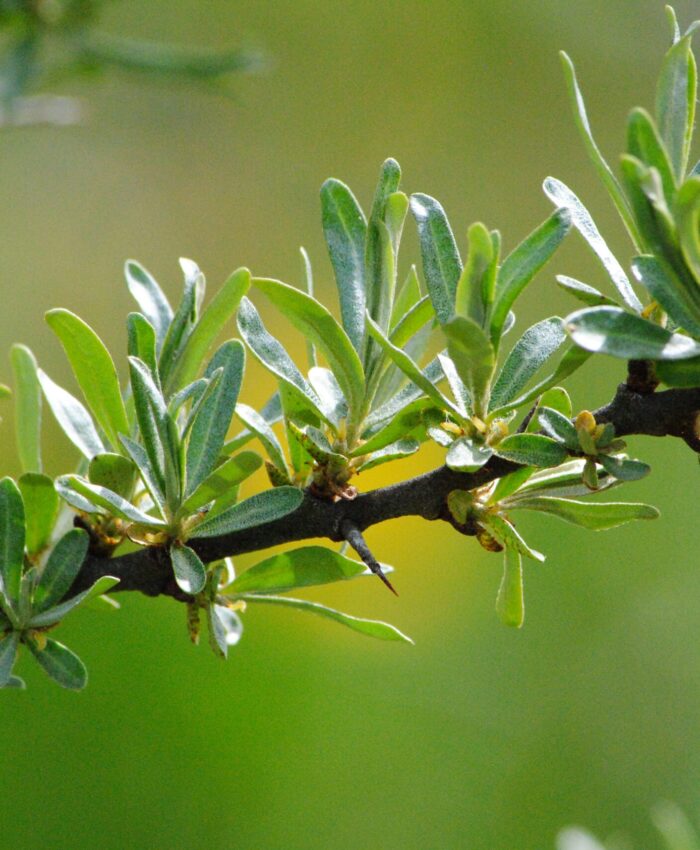
Sea buckthorn is different because of where and how it grows. It thrives in environments marked by strong sunlight, wind, cold, drought, and poor soils. In such settings, protecting the berry against environmental stress is critical. Within the pulp oil and outer tissues of the fruit, palmitoleic acid appears to function as part of an additional lipid-based protective layer. Together with other lipids and carotenoids, it helps create a hydrophobic, oxidation-resistant environment in the outer berry tissues.
This is particularly relevant under conditions of high UV exposure, drying winds, and large temperature fluctuations. In northern or otherwise challenging environments—where the growing season is short and stress factors are intense—the chemical profile of the berries shifts accordingly. Sea buckthorn responds by adjusting its lipid and antioxidant composition.
Omega-7 does not define sea buckthorn as a species. But it helps sea buckthorn remain sea buckthorn where conditions are unforgiving. Its presence is less about nutritional fashion and more about ecological chemistry shaped by stress, adaptation, and survival.
- Fatima, T., Snyder, C. L., Schroeder, W. R., Cram, D., Datla, R., & Wishart, D. (2012). Fatty acid composition of developing sea buckthorn (Hippophae rhamnoides L.) berry and oil. Journal of the Science of Food and Agriculture, 92(10), 1984–1990.
- Yang, B., & Kallio, H. (2002). Composition and physiological effects of sea buckthorn (Hippophae rhamnoides) lipids. Trends in Food Science & Technology, 13(5–6), 160–167.
- Zielińska, A., & Nowak, I. (2017). Abundance of active ingredients in sea-buckthorn oil. Lipids in Health and Disease, 16, 95.